
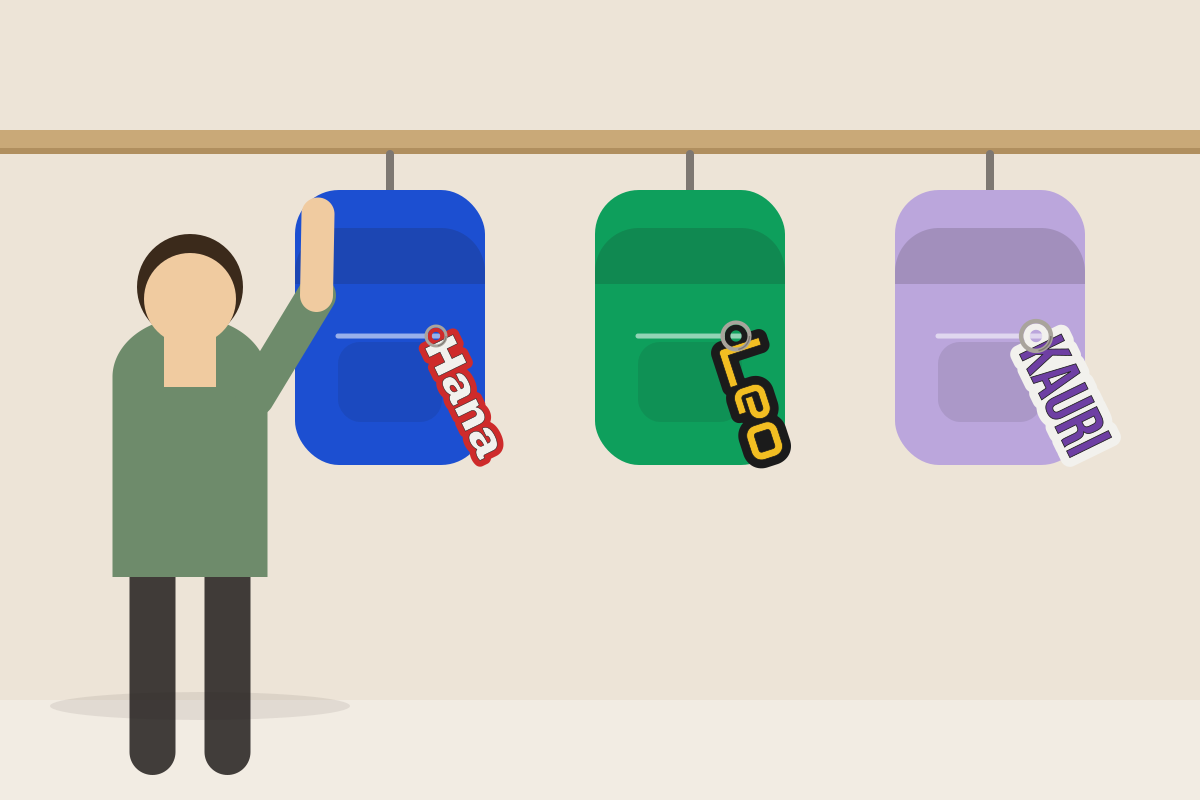
Bag charms have a short and well-documented life cycle: bought in February, admired for a week, snapped off a zip by April, found in the bottom of the bag in December. If you are buying one to put a child’s name on a school pack, it is worth knowing where it actually fails.
So here is what one of these is made of, where it is weak, and how to hang it so it lasts.
What it is
One printed piece, about 3.8mm thick. A 2mm back plate with the letters standing 1.8mm proud of it, printed in a second colour in the same pass — not painted on, not a sticker. The two colours are two filaments, so the name can’t scratch off: it is a different piece of plastic, fused to the first.
The plate isn’t a rectangle. It’s the name itself, grown outwards by 3mm in every direction until the letters join into one solid shape. That’s why no two names make the same outline, and why a short name comes out chunky and a long one comes out long and low.
All ten colours are PLA. That is a plastic with a low glass transition temperature, which in plain terms means a charm left on a car dashboard through a Northland summer can soften. On a bag it is fine; on a windscreen it is not.
Where it breaks
Two places, and neither is the middle of the plate.
The ring tab. The hole for the split ring is 4mm across, sitting in a rounded tab on the left-hand end. That tab is the narrowest load-bearing part of the whole charm, and it’s where a sideways yank concentrates. It’s printed as part of the plate rather than glued on, which is the main reason these outlast the keyrings with a metal fitting pressed into a hole.
The thin part of a letter. In a light or script typeface, the stroke between two counters can get genuinely thin at small sizes. We measure this: the narrowest stroke every font prints at is checked against the real size of your name before we build it, and a combination that would come out too fragile is refused rather than sold. That refusal is the system working, not a bug — but it does mean the heavier fonts are the sensible pick for anything that lives on a school bag.
How to hang it
- A split ring, not a lobster clip. A clip has a spring and a gate and about four failure modes. A split ring has none.
- On the zip pull, not the handle. A charm on a handle gets sat on, caught in doors, and used as a handle. On the pull it hangs in the shadow of the bag.
- Not on the outside of a pocket that gets dragged. Anything that scrapes along a concrete step twice a day will scrape.
Choosing colours that still read at arm’s length
The point of a name on a bag is being able to pick the bag out of a pile from two metres away. That’s a contrast problem, not a colour problem.
Dark letters on a pale plate, or pale on dark, read from across a room. Two mid colours — bright blue on purple, say, which measures 1.06 to 1 — look handsome in the preview and turn into a smudge in a corridor. The configurator flags a pair when it’s too close to read; it won’t refuse it, because the raised letters do cast a real shadow and some people genuinely want the quiet version. On a school bag, take the warning.
Names that don’t fit, and what happens instead
The plate maxes out at 120mm wide. Rather than refuse a long name, we shrink the letters until it fits — down to a 6mm cap height, below which it stops being readable at arm’s length and we say so instead of printing something nobody can use.
In practice that means almost every name fits, including the long ones. There’s a separate post on macrons and long names if that’s the question you came with.
Cost
$16 each. Postage is $7, free over $80, and up to twenty go in one envelope — so if you’re doing a whole family’s bags at once it’s one postage charge for the lot.